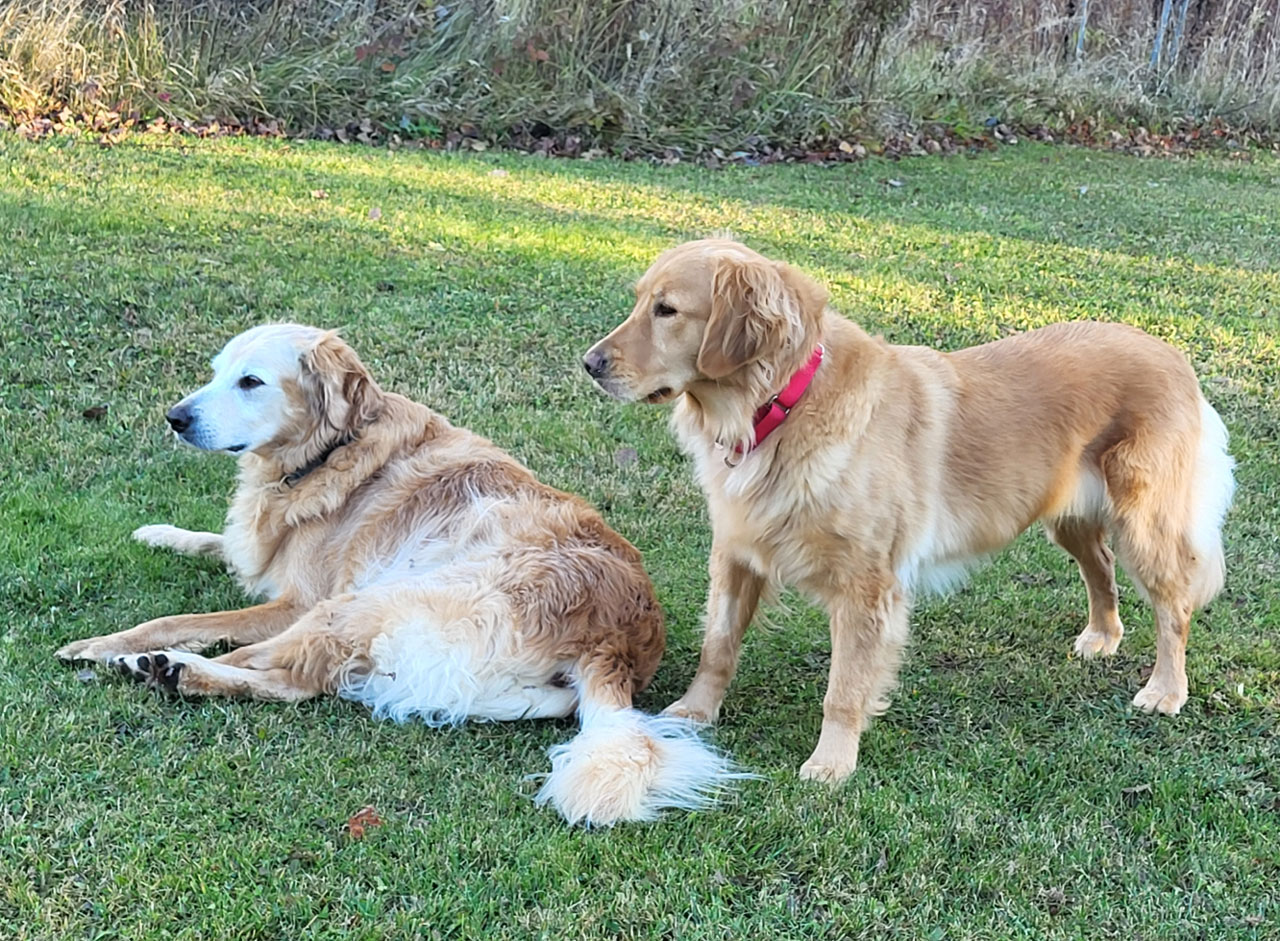
A well-behaved, confident dog is a happy dog. While training takes patience, it benefits both your dog and your family. Puppies and adolescent dogs (18 months to three years) need it most, but even adult dogs benefit when adjusting to a new home.
Dog training is unregulated, so it’s important to research carefully. Anyone can claim to be a trainer, so stay vigilant. Advocating for your dog can be difficult, especially when someone presents themselves as an expert, but staying vigilant is key. Watch for red flags, trust your instincts, and walk away if something feels off.
RAGOM does not endorse the use of any aversive training techniques, including but not limited to:
- Prong, shock or choke collars
- Kneeing a dog in the chest
- Rubbing a dog’s nose in urine or feces
- Pinching a dog’s ears or genitalia
- Any form of physical abuse
Behavior issues
- Aggression (AHS)
- Excessive Barking (AHS)
- Separation Anxiety (AHS)
- Storm and Noise Anxiety (AHS)
- Submissive and Excitement Urination (AHS)
Behavior resources
- Ladder of Communication—How a Dog Says “No”
- Pet Behavior Library (AHS)
- Why Dogs Bite and How They Warn Us (Doggone Safe)
- Dog Bite Prevention (Doggone Safe)
- Eileen and Dogs
- Fearful Dogs
Training specifics
- Crate Training (AHS)
- Housetraining: A Survival Guide (AHS)
- Introducing Dogs (AHS)
- Introducing a Dog and Cat (AHS)
- Managing Mouthing (AHS)
- Socializing Your Dog (AHS)
Training resources
- Agile Canines (St. Louis Park)
- Animal Humane Society (Golden Valley)
- Animal Inn (Lake Elmo)
- Calm Companions (Cottage Grove)
- Delighted Dogs (Lakeville / Virtual)
- Down Dog Studio (Fargo, ND)
- Fusion Pet Retreat (Minnetonka)
- Giffy Dogs (St. Paul / Virtual)
- Go Anywhere Dog (S. Metro / Mpls)
- Kristy Francis (N. Metro / Albertville / Mpls)
- Nerdy K9 Academy (Sioux Falls, SD / Virtual)
- Paws Abilities (S. Metro / Rochester)
- Rogues and Rascals (N. Metro / Virtual)
- Tenacious Dog Training (Sioux Falls, SD)
Recommended Trainer Certifications
When selecting a trainer, we recommend choosing one with professional credentials, such as:
- CBCC (Certified Behavior Consultant Canine)
- CPDT (Certified Professional Dog Trainer)
- KPA (Karen Pryor Academy)
- CTC (Certificate in Training and Counseling)
- Specialized certifications for specific behaviors or those issued by accredited universities
Note: We routinely review and update our list of recommended trainers and training facilities. Any trainer found using aversive techniques will be removed from our list.
Considering a Board and Train Program?
RAGOM encourages families to train alongside their dogs to improve technique and strengthen their bond. Instead of board and train programs, we recommend working with certified, reinforcement-based trainers who use rewards rather than punishment. If board and train is necessary, only a few facilities follow humane, science-based methods with certified trainers.