Bidding for the Goldzilla Summer Mini-Auction is now closed. Thank you to everyone who participated! Originally posted on Tuesday, July 17, 2018:
Goldzilla 2018 will introduce online bidding for its popular silent auction. Auction items will be on display at Goldzilla, but instead of entering your bids on paper sheets, you will bid online and receive text messages when higher bids are entered. So you can spend more time enjoying everything Goldzilla has to offer!
Can’t wait until September for Goldzilla fun?
Support RAGOM by participating in our first-ever Goldzilla Summer Mini-Auction, a special online event offered as we transition to the new auction system.
The Goldzilla Summer Mini-Auction will run from Thursday, July 19, 2018 at 6:00 a.m. CDT, through Monday, July 23, 2018 at 9:00 p.m. CDT. This mini-auction takes place entirely online—you preview the auction items on the bidding website (see link below).
Featured items include:
Tickets for our beloved local sports teams: Vikings and Twins
Amazing artwork from Tom Mosser
Bangle from Alex & Ani
TaylorMade golf bag
And maybe a little something for our favorite four-legged friends
Register now so you’re ready for the action!
To set up your profile and receive your bidder number:
Go to RAGOM.cbo.io on a computer, tablet, or mobile device
Review the welcome and auction overview information
Click or tap the blue “Register Now” button
Allow text messages to keep track of your bids throughout the auction
Enter your mobile number, email, address, and credit card information to complete registration (your credit card will be charged only if you place the winning bid for an item)
Your bidder number will appear on screen—please keep track of this number—it is the identifier you will use to place bids throughout the auction!
(Please note that you will need to register again for the Goldzilla silent auction in September.)
Remember, bidding kicks off on Thursday, July 19 at 6:00 a.m. CDT and ends on Monday, July 23 at 9:00 p.m. CDT.
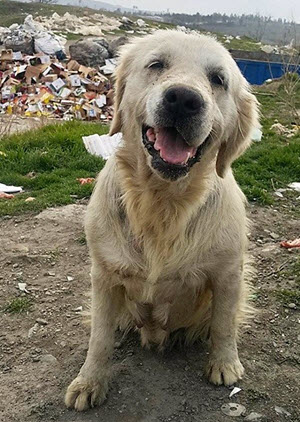
RAGOM welcomed its nine newest members on Saturday, April 21. Just days ago, these dogs were living in the country of Turkey, struggling to survive on their own in the forests and on the streets of Istanbul. Municipal shelters are overcrowded and few people are interested in adopting.
RAGOM learned of the plight of Turkish Goldens in 2015, and began efforts to rescue as many dogs as possible. This is the sixth group of Turkish dogs RAGOM has rescued.
The nine dogs flew from Istanbul to Chicago where they were greeted by a team of volunteers. After a break to eat, play, and get their kennels cleaned, they were driven to Minnesota.
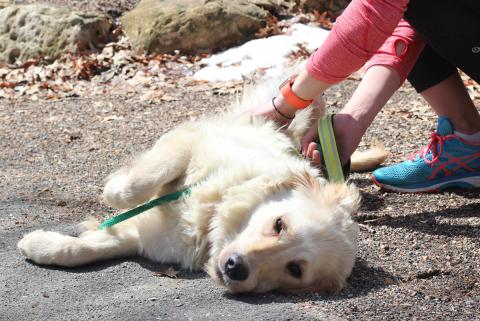
Jess 18-062TD enjoys a belly rug in the sunshine.
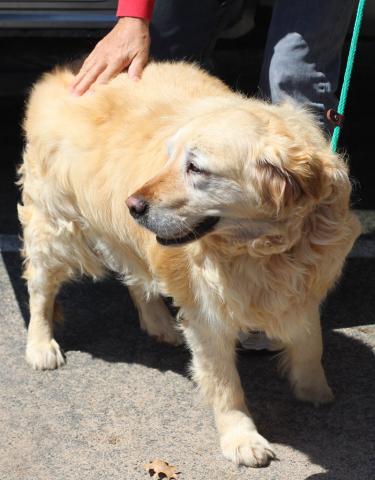
George 18-055TD sets foot in Minnesota.
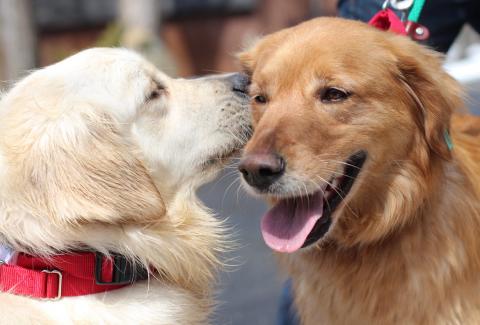
Jess 18-062TD probably doesn't need to tell Shuster 18-060 that he's a lucky boy.
Another team of volunteers welcomed the dogs into RAGOM’s care. The dogs were bathed, and their RAGOM paperwork was completed. Between their welcome activities and meeting their foster families, the dogs had time to play and enjoy lots of belly rubs and attention.
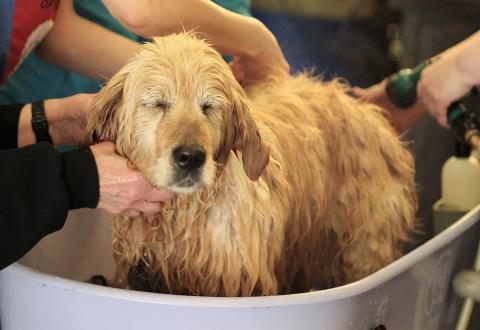
Mikaela 18-057TD relaxes during her bath.
All of the dogs enjoyed the attention of volunteers who transported them from Chicago and greeted them in Minnesota.
The dogs have all settled into their foster homes. They will be available for adoption when their foster families have gotten to know them and determined the type of family and home situation that best suits each dog. Watch our Adoptable Dogs page for their dog bios and requirements to be posted.
On behalf of all of us at RAGOM, thank you to everyone who contributed to make these dogs’ amazing journey possible. You made many Goldens smile!
More than 1,000 Golden Retrievers living in the country of Turkey are struggling to survive. Municipal shelters are overcrowded and few people are interested in adopting. Dogs are often let loose in the forests or left to fend for themselves on the streets.
We currently have the opportunity to rescue nine of these Goldens, but we need your help! The cost to transport each dog to the United States is $1,850. Please donate to support a Turkish dog’s rescue journey to America.
Shuster
Shuster 18-060TD was found with Meg 18-058TD living in a garbage pit near a small town. X-rays revealed that at one point he had a broken leg, but it does not appear to affect his gait. He is about 5 years old and very sweet and loving. Shuster is named after John Shuster, a member of the gold medal-winning U.S. Olympic curling team.
Jess
Jess 18-062TD was found in a small town, covered in mud and terribly frightened. A Turkish volunteer took her in and searched for her family, but no one claimed her. She then spent three weeks at a vet clinic while being treated for an ear infection. Jess, a young and happy dog, is named in honor of Jessica Diggins from Afton, Minnesota who, with her teammate Kikkan Randall, won the United States’ first ever cross-country skiing gold medal at the 2018 Winter Olympics.
Kiki
Kiki 18-059TD was found at a bus station in the town of Sakarya. Many days passed and she never left the area, sleeping there every night. No family ever claimed her. She was rescued by our Turkish friends who report that she is between 1 and 2 years old, and very sweet and calm. Kiki is named after Kikkan Randall who, with her teammate Jessica Diggins, won the United States’ first ever cross-country skiing gold medal at the 2018 Winter Olympics.
Chloe
Chloe 18-061TD was adopted by a Turkish family after living in a municipal shelter. A few months later rescuers found her wandering the streets and contacted the family, but they no longer wanted her and had abandoned Chloe to fend for herself. She has a cloudy right eye that might need medical treatment. Her rescuers describe her as “total love.” Chloe is named after Chloe Kim, a U.S. Olympic gold medalist in snowboarding.
Hamilton
Hamilton 18-056TD is a 2-year-old boy who was surrendered to a municipal shelter by his family. At some point his foot was broken, likely from being hit by a car. He never received medical care, so his foot is curved outward. But Hamilton runs and plays like a normal dog. He is loved by his rescuers and everyone who meets him. Hamilton is named in honor of Matt Hamilton, a member of the gold medal-winning U.S. Olympic curling team.
Mikeala
Mikeala (“Miki”) 18-057TD is between 6 and 7 years old. A rescuer found her begging in a campground picnic area outside the forest in Bursa. She is overweight but otherwise seemingly healthy. Our Turkish friends report that she is a very sweet girl. Mikeala is named after Mikeala Shiffrin, a two-time U.S. Olympic gold medalist in skiing.
Landy
Landy 18-063TD was found in a wealthier area of Istanbul where it is common for people to buy and then abandon dogs when they are tired of them. When he was rescued volunteers reported that he was especially sad. He is a very good boy who needs a family. Landy is named after John Landsteiner, a member of the gold medal-winning U.S. Olympic curling team.
Meg
Sweet Meg 18-058TD is estimated to be between 5 and 8 years old. She was found at the local garbage pit and had recently given birth to a litter of puppies, who died one by one while living at the dump. Meg had an impact wound on her head that has since healed, but her face is still swollen and her eye is possibly damaged. Despite all Meg has been through, she appears to always be smiling. Meg is named after Meghan Duggan, a member of the gold medal-winning U.S. Olympic hockey team.
George
George 18-055TD is 9 to 10 years old, incredibly sweet, and loves people. He was found two years ago when his rescuer saw his adorable face peering out from the fence at a local shelter. She could not leave this senior boy to languish, knowing he would likely never be adopted. He has lived with her since, patiently waiting for a family to call his own. George is named in honor of Tyler George, a member of the gold medal-winning U.S. Olympic curling team.
Please help us save these dogs so they can live the Golden lives they deserve.
If you prefer to make a contribution by postal mail, send your donation to: Retrieve a Golden of the Midwest, 5800 Baker Road, Suite 120, Minnetonka, MN 55345. Questions? Email info@ragom.org or call 952-946-8070.
If you have a Golden Retriever or know someone who does, you might have heard about the Golden Retriever Lifetime Study—a monumental effort to uncover the factors associated with cancer and other major diseases in dogs and improve prevention, diagnosis, and treatment.
Researchers from the Morris Animal Foundation and Colorado State University are studying more than 3,000 Golden Retrievers from across the country. All dogs were enrolled prior to their second birthday and will be closely monitored throughout their lives.
In addition to biological samples and data collected by their veterinarians, the dogs’ owners document and report on every factor in their dogs’ lives: diet and the type of bowls they use, where they sleep, what they chew on, if they get their teeth brushed, and countless other activities that seem mundane but could uncover a significant risk factor that future dog owners can easily change.
Learn more about the Golden Retriever Lifetime Study, including research updates and stories about the dogs enrolled: https://caninelifetimehealth.org/
Originally published in National Parks magazine (Winter 2018, “A Very Good Dog,” by Nicolas Brulliard) and republished on ragom.org with the permission of National Parks magazine.
Whoever picked Happy’s name chose well. Best known for offering comfort to visitors to Flight 93 National Memorial in Pennsylvania, Happy maintained his sunny disposition during a stay in a shelter, when he underwent hip replacement surgery, and even during a battle with abdominal cancer that he ultimately lost. He died in August [2017] at around age 12, and lived up to his name until the end.
Happy’s professional career of comforting began in 2012. Well aware that happiness is a rare gift, Happy’s owners, Marsha and Tom Dulz, thought it would make good sense for their rescue dog to share his sloppy kisses and boundless love with those who needed it most. Over the course of nearly four years, Happy made the three-and-a-half hour round trip to Flight 93 National Memorial 76 times.
The memorial, located at the site of the Sept. 11, 2001, crash of United Airlines Flight 93, honors the plane’s 40 passengers and crew members, many of whom fought hijackers to regain control of the aircraft and prevent it from reaching its intended target. No one survived the crash.
Each year, hundreds of thousands of people visit the memorial, and many are overwhelmed with sadness or anger. The visit brings back harrowing memories of that day’s events and prompts visitors to question whether they would have had the courage to stand up to terrorists the way the Flight 93 passengers did.
“There is a self-examination that takes place at Flight 93, and many visitors are not prepared for that,” said Kathie Shaffer, a longtime volunteer at the park. Some visitors ask volunteers for hugs, but many don’t know what to do with the emotions the visit can trigger.
That’s where Happy came in. Waiting at a respectful distance from the Wall of Names honoring each of the crash’s 40 victims, Happy would intuitively sense what visitors needed, whether it was just a tail wag or a more hands-on experience. “They could sit on the bench and pet the dog,” said MaryJane Hartman, the park’s chief of interpretation and visitor services. “They found it very therapeutic.”
Happy was particularly helpful to parents unsure about how to answer their children’s questions about the September 11 attacks. He would entertain the little ones while easing the grown-ups into what could be difficult conversations. “It relieves the tension,” Shaffer said. “When you’re standing there petting the dog, you can talk about the bad guys.”
Happy welcomed the attention of all but showed special respect to veterans. He would stand up every time one walked by in uniform. He also always greeted visitors in wheelchairs first, Marsha Dulz said.
Little is known about the first five or six years of Happy’s life or how he ended up in a rescue shelter. “You don’t get to ask many questions,” said Donna Thompson, a family friend of the Dulzes. Thompson learned of Happy’s predicament and put Marsha Dulz in touch with the shelter.
At that point, Happy was walking on three legs because of a bad hip — he would later earn the nickname “tripod” from the Dulzes’ grandchildren. Marsha Dulz took him in and later brought him to a veterinary surgeon who replaced both his hips.
Once Happy was up and running, the Dulzes decided it was time to share the love, so they began training him to be a therapy dog. To pass the certification test, therapy dogs must resist the temptation to eat food or grab objects lying nearby, walk safely around people on crutches, remain impervious to startling noises and, of course, be amenable to plenty of petting. “It’s a pretty stringent test,” Thompson said. Happy aced it.
Outside of working hours, Happy embraced his competitive side: He spent much of his spare time chasing prizes in so-called nose work contests. Happy would race to find birch- or anise-scented cotton swabs hidden in boxes, vehicles or other locations. He received the Harry Award, which recognizes rescued dogs that display extraordinary ability and spirit in nose work. “For the quiet, soft Happy, this was his alter ego,” Marsha Dulz said.
Though Happy retired from his volunteer duties at Flight 93 in September 2015, he continued to visit patients at a local nursing home until 10 days before his death. Those who knew Happy miss him dearly, but they take solace in knowing that he touched so many lives. “He was very, very gentle,” Hartman said. “He really opened doors that wouldn’t have opened otherwise.”
Nicolas Bruilliard is a journalist and former geologist who joined NPCA in November 2015. He writes and edits online content for NPCA and serves as associate editor of National Parks magazine (https://www.npca.org).
Did you know that your Amazon shopping can benefit RAGOM?
AmazonSmile is a simple and automatic way for you to support RAGOM every time you shop, at no cost to you. You’ll find the exact same low prices, vast selection, and convenient shopping experience as Amazon.com, with the added bonus that Amazon will donate a portion of the purchase price to RAGOM.
And now through March 31, Amazon is tripling the donation rate to 1.5% for shoppers who make their first eligible smile.amazon.com purchase.
Update to Nelly’s story published on Tuesday, February 13
Shortly after Nelly 18-013 was rescued from a commercial breeding auction, RAGOM learned she suffered from a serious heart condition despite being only 7 1/2 months old. Nelly needed life-saving ablation surgery to allow her heart to beat normally, a procedure so specialized that only two U.S. veterinary clinics offer it.
Once again, the RAGOM community pulled together: generous donors raised the necessary funds, RAGOM volunteers drove Nelly to Ohio and back, and a canine cardiologist specializing in heart arrhythmia found and ablated the troubled pathway in Nelly’s heart.
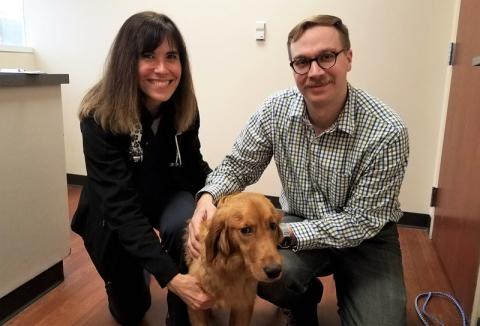
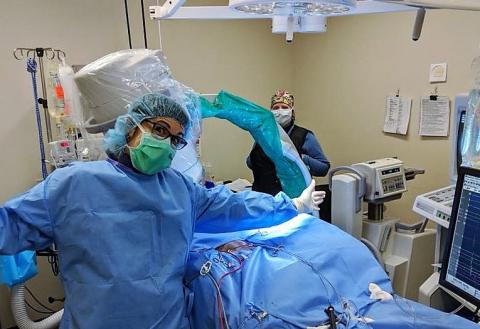
Dr. Wright and Dr. George with Nelly prior to her procedure.
Upon arriving in Ohio, RAGOM transport volunteers Scott and Patty B. checked Nelly in to the hospital, and the veterinary staff prepared her for the next day’s surgery. Nelly was fitted with a special EKG jacket, and a veterinary technician monitored her for the entire night.
The next morning doctors attached paddles to her small body in the case her heart stopped—every precaution was taken to keep Nelly safe. The procedure lasted 5 1/2 hours, performed by Dr. Wright and observed by Dr. George, Nelly’s Minnesota cardiologist. The operation was a success, and Nelly is expected to live a full and healthy life.
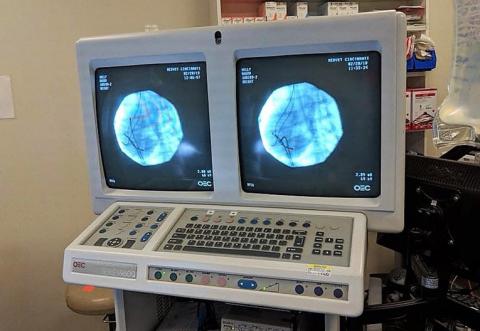
Monitors guide the surgeon during the ablation procedure.
Dr. Wright celebrates the successful surgery.
The following day, Scott and Patty checked Nelly out of the hospital and began their journey home, dodging a snowstorm. After spending the night in Chicago, the trio headed for Minnesota, where Nelly was reunited with her foster family, six days after their journey began.
Nelly before heading home to Minnesota.
The next challenge is keeping Nelly quiet for the another week. Her doctor warned that she will have lots of energy now that her heart is working properly, and Nelly will be ready to play and act like the puppy she is. To us, that sounds like a pretty good problem to have!
Originally posted on Tuesday, February 13, 2018: Nelly 18-013 was rescued recently from a commercial breeding auction, saved by the love of RAGOM volunteers, donors, and partners. But we’ve since learned she has a damaged heart despite being only 7 1/2 months old. We’ve launched a fundraising campaign to ensure Nelly gets the special surgery she needs.
When Nelly’s foster mom brought her to the vet last week, she was nervous about Nelly’s enlarged belly. She’d hoped the news would be simply that Nelly was pregnant; instead she learned that her abdomen was filled with fluid due to Right-Sided Heart Failure. Nelly’s sweet heart was racing at 300 beats per minute—she was lucky to be alive.
Nelly’s heart has an abnormal electrical pathway that doesn’t end where it should. It passes the normal stopping point, and as a result, shocks her heart. The cure is a procedure called ablation that would burn out the electrical hot spot. Although this procedure isn’t very invasive, only two veterinarians in the country offer it. The closest is in Ohio. This procedure would make it possible for Nelly to live a long, healthy life. But the total cost is expected to reach $5,000.
With your support, a volunteer will drive Nelly to Ohio where she will receive the ablation surgery.
On February 14, 2018, RAGOM celebrated its 33rd anniversary and launched a new informational video featuring Reuben 17-273, now known as Leo by his forever family.
The video follows Reuben’s journey from November 2017, when he was rescued, through December 2017, when he was adopted by a loving family. Leo (Reuben) now has two human siblings to play with and share his Golden Life.
The video also explains how RAGOM cares for our dogs and steps through our process from home visit through adoption.
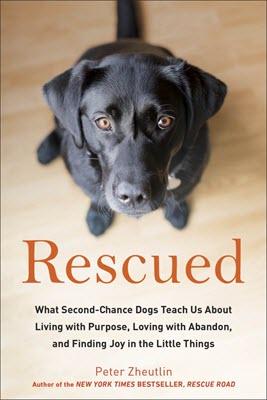
Peter Zheutlin, New York Times best-selling author of Rescue Road, and now author of Rescued (released October 3, 2017), will be speaking and signing books at two events:
Monday, December 4: Common Good Books in St. Paul (map)
Tuesday, December 5: RAGOM Office in Minnetonka (map)
Peter will speak from 7:00 – 8:00pm, and then sign books from 8:00 – 9:00pm.
Rescued is a tribute to life with shelter dogs and shares Peter’s experiences, as well as stories from other adoption advocates, about how second-chance dogs saved their lives. His presentation will reflect the subtitle of Rescued: “What Second-Chance Dogs Teach Us about Living with Purpose, Loving with Abandon, and Finding Joy in the Little Things.”
Join us to meet Peter, as well as RAGOM foster dogs and volunteers.
As humans, we progress through developmental stages in the process of aging, and our needs and expectations change with each stage. Our four-legged family members also experience significant changes from birth to old age.
Puppies, youngsters, adults, and senior dogs have varying needs. An adoptive family must meet those needs and should consider where they are collectively as humans when deciding to bring a new dog into their home. The important question is, “What can we handle?”
We all know the pure joy of puppies and everything that entails: puppy breath, puppy kisses, chubby bellies, and those big clumsy feet. Along with those wonderful attributes, however, come razor sharp teeth, indefatigable energy, potty and poop accidents on the carpet, and lots of jumping, just to name a few.
A family or individual adopting a puppy must consider if they can devote the necessary time, patience, and energy to housetraining and obedience training. Are they willing to sacrifice upholstered furniture, stuffed animals, and a beloved shoe (or two or three) to the destruction that comes with puppy madness? For most dogs, puppyhood lasts approximately 18 months. Can the family or individual’s patience last as long?
Adopting a puppy requires considerable time, patience, and energy.
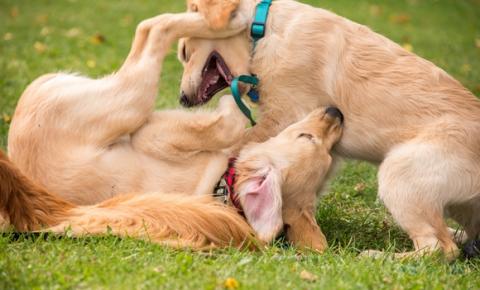
From about 18 months until approximately three years, an adopting family will have a rambunctious and, at times, infuriating youngster on their hands. While housetraining may no longer be an issue, other challenges arise.
A dog at this stage is still learning about their strength and testing their place in “the pack.” A family must commit to begin or continue obedience training and provide lots and lots of exercise. And they might want to continue hiding shoes, throw pillows, and children’s toys.
A youngster is still learning their strength and place in your family.
At approximately three years, a dog enters adulthood. When adopting a dog in this stage, a family must understand that the dog will need time to adapt to new surroundings. The behavior and demeanor of an adult dog in a new environment is a product of prior training and experiences.
Adopting an adult dog will be most successful when this new relationship is approached with love, patience, an appreciation of past circumstances, and a willingness to provide stability and consistency.
An adult dog needs time to adapt to new surroundings.
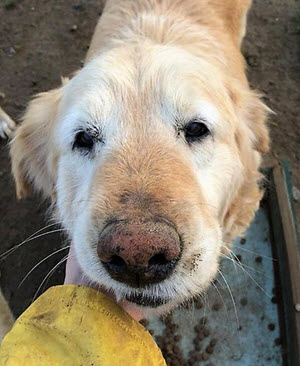
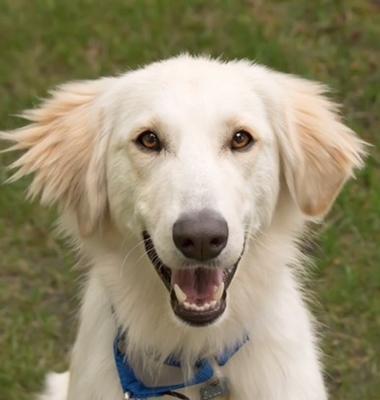
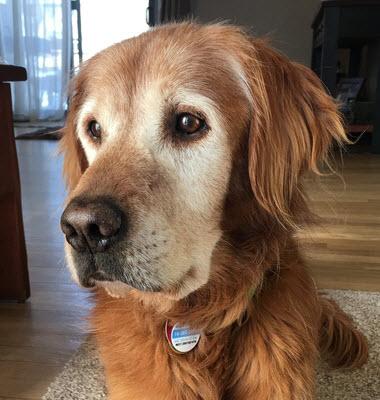
For many adopters the sweet, white “sugar-face” of a senior dog is as compelling as puppy breath is to others. There is something so poignant and beautiful about loving a sweet, senior soul. A family or individual who opens their heart and home to a senior is very special indeed.
Not only will their time with these special dogs be limited, but these adopters understand that a senior rescue dog will likely be traumatized by their abrupt change of circumstance. Adequate time to adapt and proper senior veterinary care are essential. A senior dog, given patience and love, is priceless.
A senior dog, given patience and love, is priceless.
The decision to adopt a dog is a big one. It requires careful consideration of family circumstances and many aspects of the dog: prior experiences, behavioral tendencies, breed, gender, and age. When taken seriously and with much family discussion, the decision to adopt a rescue dog will offer a lifetime of love and joy.